
By Staff Writers Cecilia Cheng & Finn McCarthy
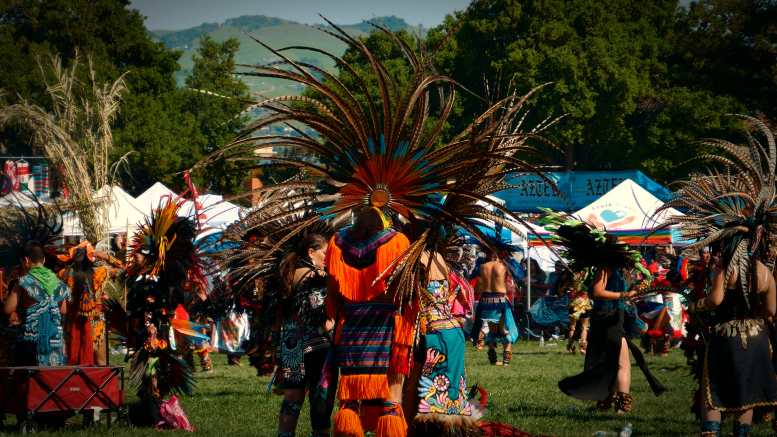
In San Jose for the 28th Annual Mexica and 5th Annual Cali Native Night, a celebration of indigenous cultures in the Bay Area after years of suppression, thousands of people gathered in the grassy field of San Jose’s Emma Prusch Farm Park. Featuring nations across California — including the San Francisco Bay Area’s aboriginal Muwekma Ohlone — and their southern relatives from Mexico, the March 13-15 weekend fostered a sense of community and acknowledgement for the indigenous peoples. By giving space for traditional ceremonial practices, aboriginal voices were able to be heard and respected.
Hosted by the San Jose-based Aztec dance group Calpulli Tonalehqueh, the celebration centered on the Mexica New Year and commemorated thousands of years of indigenous practices. The new year follows a 365-day seasonal calendar consisting of 360 days and five nameless days; the five are considered to be unlucky and potentially calamitous. At the end of the five nameless days is the new year — observed by the indigenous Mexica people of the Valley of Mexico — which celebrates the new agricultural cycle. While the Mexica New Year is more specific to the Mexica people, it is also celebrated by the wider Nahua community.
However, before the new year festivities began, a day was dedicated to giving space to the indigenous nations of California to dance and pray. Despite the Muwekma Ohlone tribe being the aboriginal peoples of the Bay Area, they are not federally recognized and therefore do not enjoy as much freedom in practicing their culture. “The Mexica —Tonalehqueh — offered a day before their new year, the Mexica New Year, to open up that space for our dance so that we can gather and celebrate the rebirth of spring,” Muwekma Ohlone Chairwoman Charlene Nijmeh said. Since people with backgrounds from indigenous Mexican communities are also living alongside the Muwekma Ohlone in the Bay Area, a relationship was fostered that eventually resulted in a day for the indigenous people of California to celebrate their tradition — Cali Native Night.
Cali Native Night kicked off the event on Friday evening, beginning with a land acknowledgement, followed by performances by the Muwekma peoples, Round Valley Covelo, and the Pomo tribe. Throughout the night, dancers wearing traditional regalia entered the fenced circle through an arch made of grass, where others were singing and playing wooden instruments. Dancing plays a prominent role in indigenous culture due to its ties to spirituality and healing, which are valued in such customs. For the performers to be able to wear their regalia and play their music sent the message that they have survived the pain history has inflicted upon them — and that they will continue to survive.
The night ended with the sacred Bear Dance, which, at its core, is a celebration of the arrival of spring. “The Ohlone people went to sleep for a short period of time, but now we’re reawakened, and we’re coming together again to dance and sing and pray together,” Nijmeh said. “We have a lot more relatives this year who have joined us in dance and prayer and song around that fire — just like our ancestors did.”
The last two days of the Mexica New Year highlighted the Mexica peoples and their traditional celebration. In the same dance circle, drums and woodwind instruments, used to strengthen connections with the divine, played as performers in feathered regalia, with ayoyotes around their ankles, surrounded the central fire pit. The plumes of their headdresses symbolized fertility and power, while the ayoyotes mimicked the sound of rain to connect indigenous peoples to nature. Under the hot sun, members of Calpulli Tonalehqueh offered refreshments to dancers in the form of water bottles and citrus. While Danza Azteca is a way for Mexicas to connect with their historical roots, dancers from all backgrounds came to celebrate indigenous culture. “It feels peaceful. The weather is nice,” Vendor Oscar said. “With all the stuff that’s happening right now, I [see] a little bit of community healing.”
For some, being with other people from a similar heritage allowed them to express themselves freely when they felt that they couldn’t do so otherwise. “This [event] means a lot to me, especially with what’s going on in the world right now,” Danza Azteca performer Kendra said. “I would like to come out and show my support to all my other Mexicans.”
Be the first to comment on "28th Annual Mexica New Year brings indigenous communities together in San Jose"