
By Staff Writer Rosie Gao
One of my most vivid childhood memories of the Bay Area before I moved away is getting lost at the Monterey Bay Aquarium. I had strayed from my family and found myself admiring a tropical fish tank, my face pressed against the glass. Up close, the fish were excessively beautiful. Each one was painted in artificial hues of electric blues and violent yellows too bright to seem real. But to my disappointment, when I tried to follow one fish across the tank, it would flare briefly before disappearing again into the kaleidoscopic wall of color. And from several feet away, the multicolored fish were simply unremarkable, a feeling I would later recognize in myself when I returned to Fremont for high school.
After moving to Hangzhou at eight, then to New Jersey and back to Fremont several years later, I had expected returning home to resolve my existential crisis. In Hangzhou, I stood out for being too American, and in New Jersey, for being too Chinese. In every place but Fremont, the people around me were points of contrast, bringing out the hues underlying my own identity. But in Fremont, the term Chinese American was at an equilibrium, and I was no longer torn between two halves of my identity; for once, I was surrounded by people who resembled me. But instead of finding belonging, I was lost at the aquarium again, only this time I was standing amid the colorful yet vapid school of fish. I had not yet realized until then just how much of my identity depended on being different.
When I moved back to Hangzhou eight years ago, I ceased to be Chinese. During my years in the Bay Area, I was taught to be proud of my Chineseness — my heritage, the color of my skin, the language my parents spoke. But too accented for my classmates well-versed in traditional idioms and cult-classic cartoons, I discovered that I was not Chinese but American; specifically “Asian American,” a phrase that mattered little to me until I was surrounded by peers who were simply Chinese.
When I moved to New Jersey, I had to relearn how to be American again, adopting a new set of cultural references and social cues into my lexicon. But to everyone around me, I was merely yellow-skinned, or Asian: the accent that had betrayed me in Hangzhou had long faded into the fluency I once envied in my former peers, and I could impress my classmates with very standard Mandarin. Suddenly, everything that had been insignificant only months before now became what everybody noticed first about me. By this point I had learned to toss Asian and American back and forth across the Pacific and was left with an enigma that tugged quietly at me: who would I become if uniqueness could no longer define me?
Surrounded by people like me, I ceased to be anything at all.
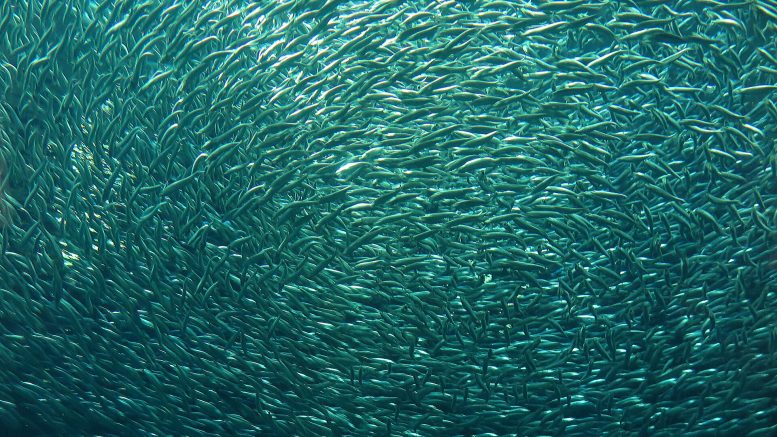
The little space between Asian and American is both distinct and blurred in Fremont. To me, Fremont’s diaspora community is like that aquarium, and we are the tropical fish who live in it. Being too American or too Asian gave me an outline (an awkward one), a complementary backdrop, but in Fremont, bright-colored scales were no longer enough to set me apart. Experiences I once treated as different — Kumon childhoods, strict parents, cultural dissonance — were so common they became clichés. I began to descend into mundanity, the difference I relied on to define myself now lost in a gaudy wall of scales. My colors bled into the school of fish until, for the first time, I could no longer tell which ones had been uniquely mine.
Ironically, even my fear of being invisible was hardly unique; the paradox of difference seemed to flatten the people around me as well. So why do we complain that everyone is the same when the world around us is everything but? It’s unfair to call the Bay Area a homogeneous place. It is profoundly diverse, home to one of the country’s largest Asian American populations — roughly 28% — and generations of immigrants who have created an enclave for cultures that would remain marginalized elsewhere. Even at MSJ, thousands of students carry distinct languages, family histories, and culture. Yet here, they all blur into one homogeneous silhouette; at some point we grow accustomed to diversity, and students joke about how interchangeable we seem.
Proximity does not erase our differences, but it can dull our perception of them. Perhaps we must leave the glass tank to recognize the beauty in the customs, histories, the iridescence that we have become so accustomed to overlooking. It took moving to Hangzhou for me to be conscious of my American identity and moving back to New Jersey to appreciate my Chineseness. Perhaps Fremont, like our scales, is best admired from a distance.
Similarity is the comfort of never having to prove your belonging, yet it is also the erasure of identity; we become conscious of our iridescence only when our colors distinguish us from others. A shade of grey may appear tinted purple against a sea of green, and green amid bright purple. Perhaps we, tropical fish trapped in a glass tank for too long, owe ourselves the occasional distance to see ourselves in a world beyond the mirrored patterns that surround us every day.
Be the first to comment on "Iridescence: finding individuality in Fremont, California"