
By Staff Writer Sophia Liao
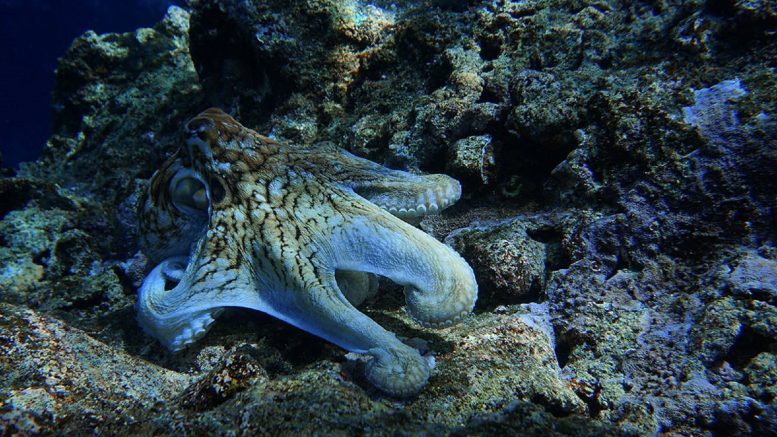
The mimic octopus is known for being able to impersonate other sea creatures by changing its shape and color. Mostly, it does this for survival, changing its appearance to look like a dangerous predator.
I wouldn’t go so far as to say I’m as talented as a mimic octopus, but I’m not humble enough to say that I’m not similar to it. For as long as I can remember, I’ve approached life as an actor. In first grade, the girl who was friends with everyone showed off her cartwheels during recess, so I practiced every afternoon in my backyard until I could do a cartwheel on both sides, one-handed. Then, in sixth grade, the girl I wanted to be friends with said that she’d been listening to the Five Nights at Freddy’s song “Never Coming Home” non-stop, so I added the entire FNAF discography to my queue as I enthusiastically agreed with her.
At the core of it, I am a people-pleaser. Here is the truth I’ve noticed: people generally enjoy talking to people they share similar ideas with. While different perspectives may be intriguing, most people hold more respect for those who have similar opinions as them. I am all the more aware of it. If someone has a strong opinion about something, I find myself reconsidering my own. If they are particularly passionate about something I know nothing about, I become interested too.
Sometimes these things are hard to notice. I laugh a little harder at jokes I do not find particularly funny. I hold back opinions that may cause disagreement. I pay attention to the things people like and quietly keep the ones they may not to myself. There is a sort of sick satisfaction to it too. I am adaptable. I have many friends. People generally think I am kind and agreeable — and I want to feed into their positive image of me as much as possible. Like the mimic octopus, I have gotten very good at changing my shape depending on my surroundings.
But sometimes it is difficult to keep pretending. I’ve become hyperaware of all the ways I am different from the people around me, as if the formula to friendship is one in which more similarities produce closer relationships. The problem with constantly adapting yourself, though, is that you forget what exactly you’re adapting from.
There is a strange loneliness in being surrounded by people who like you when you are not entirely sure which version of yourself they like. It is possible to be included in every conversation and still feel like you are standing slightly outside of it. You are physically there, talking and laughing, but in the back of your mind, you are watching yourself, making sure you say the right things. And unlike the mimic octopus, I do not have an instinct telling me when to stop changing. The octopus changes its appearance to survive; it needs to stay safe.
However, friendship should not be about survival. Constantly agreeing with someone does not make a friendship more meaningful. If I am only showing someone the parts of myself that I think they will like, they are not really getting to know me. They are getting to know a version of me that has been carefully crafted through observation.
That’s not to say that I don’t enjoy the things I’ve pretended to like. I’ve grown to enjoy writing, have discovered a lot of new music, and still think of cartwheels as a fun party trick. But there is a difference between discovering something you enjoy on your own and desperately trying to find the reason everybody else enjoys something, and it has taken me nearly my entire life to learn that.
The authentic version of me is not necessarily more interesting, but she is the one who allows people to explain new ideas rather than pretending to understand them immediately. She is the one who disagrees and says, “well, I feel a little differently.” She is more uncomfortable to be, but more rewarding at the same time.
I still struggle with people-pleasing, and I do not think I will stop caring about what other people think of me. But I have become more comfortable with the idea that I do not need to be exactly like someone to be close to them. At the end of the day, an octopus may need camouflage to survive, but I would rather not need it to be loved.
Be the first to comment on "How people-pleasing taught me to be myself"