
By Staff Writers Amy Han, Mansi Mundada & Hamnah Akhtar
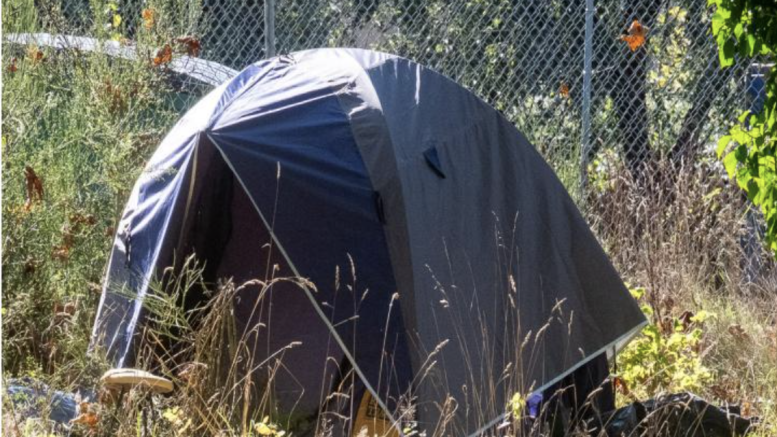
Fremont officials cleared out an encampment of more than 40 homeless individuals at Isherwood Park on November 14 with a full park closure, citing maintenance efforts. The closure of Isherwood Park is part of a broader push from the city to relocate unhoused individuals. The city disclosed in a November 12 newsletter that the park was temporarily closed for the duration of winter due to “necessary improvements and maintenance” to reduce environmental hazards. The city also states that they have been developing a relocation plan for residents since mid-2025, and that a team of staff, service providers, and volunteers, has been on site to provide information for the community. “Through that effort, 33 people are now in shelter. The remaining people decided to leave voluntarily,” Homeless Services Manager Laurie Flores said. Still, many residents of the encampment find the clearance a difficult shift. “[The move is] very emotional … we all prefer to stay,” Isherwood Park Resident Veronica Sanchez said to ABC7 News. “We’ve all been here for a long time, so we’re all close.”
Addressing homelessness has been a major priority for Fremont in recent years with a 69% increase in the homeless population from 2019 to 2022. The Housing Navigation Center, opened by the City of Fremont in partnership with Bay Area Community Services in 2020, has sheltered more than 230 residents and helped 55 individuals find employment. Fremont also expanded its emergency winter support for the unhoused community with the Winter Relief program, which has provided homeless individuals with temporary motel shelter since 2021. Last winter, the Winter Relief Program achieved its highest success rate to date, providing 5,736 nights of shelter with 46% of participants transitioning into more stable housing. These two relocation reforms have helped the homeless population drop over 30% in a span of two years — from 1,206 people in 2022 to 807 in 2024.
Still, because these programs have limited space and rely on individual initiative, which means that homeless individuals must reach out for support on their own accord, they cannot meet the needs for all of Fremont’s homeless population. San Francisco Mayor London Breed reported that nearly 60% of San Francisco’s homeless population refused shelter services. Many homeless individuals fear theft and violence that can happen at these shelters. In addition, the recent clearing of Isherwood Park only amplified concerns of reaching the homeless population by forcing a large group of people to relocate at once. Monitoring the quality of care homeless individuals are receiving and will experience becomes significantly more difficult with massive surges of individuals in need. “It really depends on the level of funding, too … When we have the funding, we absolutely increase services,” Flores said.
The clearing of the encampment also follows the adoption of the Fremont Camping Ordinance last February, which bans camping or storing property on public and private property. Although the ordinance initially included a clause that proposed fines of $1,000 and up to six months in jail for unhoused individuals, it was later removed due to controversy and backlash about the severity of the punishment. “Fremont’s efforts show real progress toward addressing the homelessness crisis, but the combination of limited capacity, restrictive laws, and recent park closures creates a system that can only support a minority of people in need.” MSJ Poverty Patchup President Junior Abirami Palaniappan said.
In direct response to dropping temperatures that pose health hazards for the homeless population, the city plans to use nearly $650,000 from this year’s Winter Relief Program funding to support and stabilize those affected by the park closure. This approach is modeled after the 2023 effort to resolve the encampment at Vallejo Mill Historic Park, a city-led initiative that expanded shelter access and outreach at the Winter Relief Program. However, Fremont homeless shelters remain unsure about how helpful upcoming funding plans will be. “The concern right now is we are seeing the intention from the federal government and the state that they are going to decrease homeless response dollars. So it’s unclear if there will be an opportunity to expand services,” Flores said.
The Fremont community remains concerned for the stricter public space regulations under the Fremont Camping Ordinance and expanding relocation efforts to ensure that the homeless population receives the support and resources they need. While relocation efforts have increased, long-term solutions have not kept up with the homeless population. “It’s a matter of trying to figure out how to house them with what’s available, and it … takes a lot of time to build those units that cater to people,” Flores said.
Be the first to comment on "Isherwood Park Closure Sparks Concern Over Fremont’s Homelessness Support Programs"