
By Staff Writers Felicity He, Varun Madhavan, Kelly Shi & Lucas Zhang
Introduction
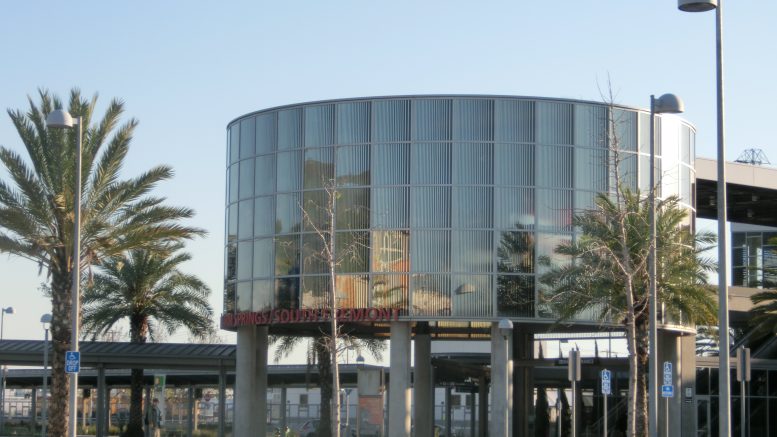
Amid the dwindling daily rush of BART morning commutes, community organizers assembled at Warm Springs BART on March 4 and 7, gathering signatures for a ballot measure that will keep the station open amid BART budget shortfalls. Since the pandemic, BART has experienced a sharp decline in ridership and revenue, relying instead on emergency funding from the state and federal government, ultimately leading to sweeping budget cuts of, at minimum, 65%. The ballot measure, known as the Connect Bay Area Act, would prevent such budget cuts to BART, AC Transit, and other transportation systems. If the measure does not qualify through local petitioning, BART will terminate services at 10 stations as part of its plan to discontinue services within the next year if alternative sources of funding are not identified, including the Warm Springs station.
Reasons for the Budget Deficit
BART’s ridership has been struggling since the pandemic, a change that correlates with an increase in people working from home. The number of passengers riding the system’s trains has decreased by 620%, consequently causing BART’s fare revenue to be down.
Before the pandemic, most of BART’s funding came from operating revenue, with 59% of the system’s money coming from fares in 2019. Declining ridership has hit the agency hard; BART is now relying on federal emergency assistance from 2020 that will run out in 2026. Once the system cannot continue relying on these emergency funds, it will face massive budget cuts and reductions in hours and extent of operation. Though ridership has steadily increased in recent years, it is still far from having risen back to pre-pandemic levels. The sustained budget deficit continues to require emergency funding from the local, state, and federal levels to stay afloat — money that has run low after being given en masse during the pandemic.
What if BART doesn’t get the needed funding?
In February, the BART Board of Directors voted on a “doomsday plan,” outlining a series of budget cuts if the system is unable to secure additional funding. This would happen in a series of three phases that cut service and increase fares to improve BART’s financial outlook.
The first phase, starting in Jan. 2027, will significantly reduce hours of operation across the system. It will end night service trains and close 10 stations, including Warm Springs Station. The second phase is set to take place in July 2027, and in addition to raising fares by 50%, it will close up to five more stations. Furthermore, BART will lay off up to 1200 police and maintenance staff. If needed, BART will shut down its operations entirely.
Residents who rely on BART expressed disappointment at the cuts. “I really couldn’t imagine [t in he potential closures] … I’ve only driven to [San Francisco] three times because it’s terrible … the traffic is just horrifying … you will not be able to pick up your kids on time,” MSJ parent and 21-year BART commuter Jenny Xiong said.
BART closures will have effects that ripple out into housing and road traffic. According to a July 2024 report on the agency’s role in the region, Bay Area drivers would travel a total of 1.2 million more miles on the road without BART’s service, which would increase highway congestion and traffic delays. As part of the effort to increase ridership, BART has been developing housing units as part of a Transit Oriented Development (TOD) project near the Warm Springs Station. “The area’s TOD master plan has resulted in approximately 4,000 new housing units and additional industrial development proposals in the pipeline … This TOD project will bring additional ridership once it is complete,” Fremont Mayor Raj Salwan said in a letter sent to the BART Board of Directors. Salwan brought up the TOD in an argument to keep the station open, saying that “[BART’s] strategy fails to acknowledge the significant benefit the location and public asset brings to the Bay Area economy.”
Efforts to mitigate the budget crisis
To address a looming fiscal deficit/budget cuts/fiscal crisis, Gov. Gavin Newsom signed the Connect Bay Area Act, a bill that would fund BART, AC Transit, and other Bay Area public transit systems to prevent drastic service cuts across those systems effective starting from the 2027 fiscal year. The bill puts a regional transit funding measure on the 2026 ballot, which is required to first be qualified by 200,000 signatures through petitioning
If passed, the measure would set a sales tax hike in affected counties, including Alameda, to provide additional transit funding, which would benefit users of BART and other systems by preventing cuts to those services’ operation. “If transit service does get cut this way, we won’t be able to get to school or to get to work or to see our friends and family. We as students rely on transit, especially because a lot of us aren’t able to drive, or a lot of us can’t afford to drive, especially with recent high gas prices,” Public Transit Advocate Noor Rizvi said. Fremont residents’ efforts to petition for and support the Connect Bay Area Act and prevent the system’s doomsday plan from being a necessary action will benefit BART passengers and the city as a whole in the long run, according to Salwan’s letter.
Be the first to comment on "How BART’s funding crisis and the possible closure of the Warm Springs South Fremont station affects Fremont"