
By Staff Writers Cecilia Cheng, Erika Liu, Michael Qin
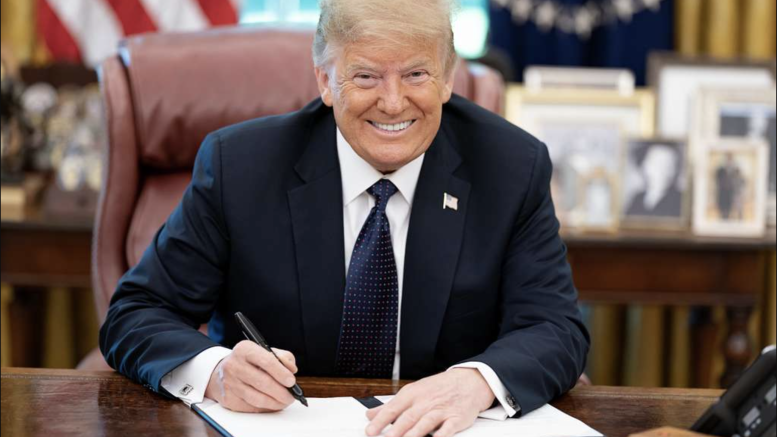
Nine high-profile colleges across the US were sent a letter signed by White House officials on October 1. The letter detailed President Donald Trump’s “Compact for Academic Excellence in Higher Education,” which would grant the colleges “substantial and meaningful federal grants” in return for their compliance with the terms. Since its announcement, the compact has been met with virulent pushback among university deans and political groups alike, and for good reason: adoption of the terms described within Trump’s proposal would indicate nothing short of an attack on the fundamental tenets of education. Further development in this direction would succeed in nothing but jeopardizing academic freedom, an issue growing increasingly relevant to MSJ students today.
The Trump administration has had a history of overreaching into higher education programs. In March, the government canceled approximately $400 million in funds for Columbia University over concerns of antisemitism on campus. Harvard also experienced similar threats over diversity, equity, and inclusion (DEI) practices in early April that disagreed with the values of the administration, which resulted in a federal lawsuit. Trump’s recent proposal adopts much more drastic terms: schools would have to abolish departments that “purposefully punish, belittle, or even spark violence against conservative ideas,” and must back right-leaning policies in line with the current administrative agenda. Educational institutions shouldn’t be beholden to federal influence — they are entitled to fostering learning environments reflective of the values they see most salient. Almost all of the nine universities who initially received the compact have either shown ambivalence toward or complete rejection of the proposal — with only two, the University of Kansas and University of Texas, remaining noncommittal. However, on October 13, the compact’s terms were extended to all colleges across the nation, prompting a few schools — the Valley Forge Military College in Pennsylvania and New College of Florida — to show interest in compliance.
The compact has already elicited nearly-unanimous opposition amongst the public, as it sets a worrying precedent for the state of academic freedom in the US going forth. “[The compact] really strikes the fundamentals of higher education,” liberal think tank New America Senior Fellow Adam Harris said. “This is the executive branch trying to circumvent and go around Congress.” Massachusetts Institute of Technology President Sally Kornbluth condemned the policy as well, stating in her response to the White House that the compact conflicted with university’s emphasis on merit-based scientific funding, instead relying upon extortive and coercive measures to dictate policies. By robbing universities of their autonomy, the compact likewise signifies the destruction of free speech within the very institutions where it should be exemplified, endangering academic freedom on a national level.
Concerns for the fate of education under political influence extend past student and educational stakeholders. “I think that [handling] anything [other than funding] is just political indoctrination because the university is then more likely to support and permeate these ideas for government favors,” Sophomore Evan Cao said. “[This offer from Trump] betrays students’ interests just to line the pockets of colleges,” Senior Kate Gerasimova said, expressing similar disapproval.
Trump’s proposal works against the interests of senior students applying for college in other ways: the policies detailed also focus on attacking international and DEI-based enrollment practices, ending consideration of identity during the college admissions process. Students further highlighted how these actions erode equity in schools, narrowing student demographics and divesting underprivileged students of valuable opportunities. “I’ve heard stories from people who didn’t have any other chance at a college that they wanted to go to after colleges stopped reaching out to their [underserved] community specifically,” Gerasimova said. “You wouldn’t want to have institutions where there’s only the same kind of people. You’d want to have a reflection of the real world in your college.”
However, Trump’s proposal opens some doors to more progressive policies in higher education: it waives tuition for students entering difficult science fields, as well as introducing conservative viewpoints to many democratically-dominated institutions. Establishing such ideological diversity helps explore the nuance of complex issues within school. However, these positives fail to detract from the fact that the compact is, at its core, an immense federal overreach of power. “[We] cannot bargain with the essential freedom of colleges and universities to determine, on academic grounds, whom to admit and what is taught, how, and by whom,” The American Association of Colleges and Universities said. Students should be able to express themselves freely in educational spaces; this compact undermines this right.
With college admissions looming for students across MSJ, making the most apt decision when choosing which school to apply to remains as relevant as ever. Trump’s compact, though promising to uphold American higher education’s status as “the envy of the world,” as stated in the compact, forces students to choose between their financial and academic ambitions or the basic rights to free speech. These changes are difficult to prevent, as the administration’s control over the school curriculum allows them to alter courses easily. “[Colleges] would have a lot of power to enforce deceptive discourse that they would not like to see on campus, which wouldn’t allow me to express myself to my full extent,” Gerasimova said. “ … I’d be quite discouraged.” Senior Jocelyn Phung, too, highlighted the importance of the separation of government from education, especially with regards to her decisions on potential college admissions. “[Politics] doesn’t have any business being in a classroom environment … They’re pushing how far they can get away with a lot of stuff. I don’t feel very safe with it,” Phung said.
Students and educational institutions alike cannot settle for a future wherein basic academic freedom is rejected for the sake of political expediency. It is integral that communities today advocate to encourage schools and major organizations to resist federal attempts at corrupting the policies of higher education, preserving the integrity and academic merit of the institutions that form crucial parts of students’ lives.
Be the first to comment on "Opinion: Trump’s compact jeopardizes academic freedom"