
By Opinion Editors Erika Liu and Warren Su, & Web Editor Finn McCarthy
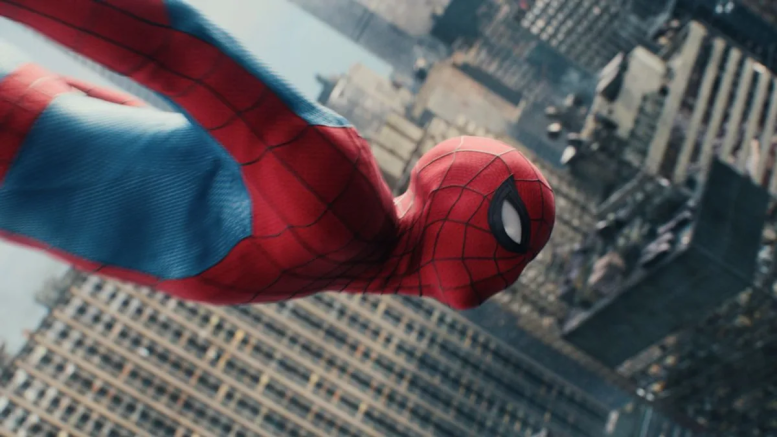
While pursuing the supervillain Scorpion, Peter Parker, better known as Spider-Man, announces in Marvel’s most recent release, Spider-Man: Brand New Day: “I have every camera in the city running a facial recognition scan for [Scorpion].”
“That sounds super illegal, Spider-Man,” his friend, Detective DeWolff, quipped. “I’m going to pretend I didn’t hear that.”
Brand New Day’s Peter Parker — or, as X has dubbed him, “Palantir Parker” — has grown suspiciously receptive to mass surveillance technologies. It’s a surreal change, taking into account Parker’s earlier iterations; even in the relatively recent Spider-Man: Far From Home, Parker openly reviled the usage of Iron Man’s surveillance eyewear, the “EDITH glasses.”
Regardless, one thing is certain: whatever strong sense of justice Parker demonstrated in Far From Home has evaporated in the span of just a few years. Once a masked vigilante, hated by supervillains and police alike, Spider-Man now proudly conducts surveillance scans over NYC in conjunction with law enforcement. He is friends with cops, has a personal AI assistant — affectionately dubbed EV — and contradicts years of anti-authoritarian messaging with zero moral qualms.
Parker uses AI and surveillance most prominently in his battle to defend the Department of Damage Control (DoDC) from Jean Grey, a grief-stricken teenager and the main antagonist. Driven by interpersonal conflict with the DoDC, Grey adopts a hateful and destructive attitude toward the often brutal effects of militaristic action on common people. It’s a familiar story — one paralleling that of Parker and his mentor, Tony Stark.
Spider-Man must not realize this similarity. Throughout the movie, Parker repeatedly cooperates with the DoDC to create increasingly invasive technologies to persecute Grey. This ranges from EV scans compiling data profiles on individual citizens to DNA suppression chips designed to control mutants. Though portrayed light-heartedly, it’s ironic to consider that Parker, a paragon of justice, accepts this brutality; that there is no other vigilante to defend NYC anymore from the supervillains that roam its streets.
Marvel’s always been enmeshed in politics, something that’s been abundantly clear since Iron Man (2008), the first installment of the Marvel Cinematic Universe. Stark’s originally Vietnam-based backstory was abruptly retconned into Afghanistan right as the War on Terror was reaching a fever pitch. The blatantly pro-military messaging was evident: despite some criticism of Stark Industries’ weapons, the US military was portrayed as favorable and glamorous; the “right hands” for the weapons to fall into.
The US Department of Defense reviewed and edited Iron Man to their liking. Marvel and the Pentagon have worked quid pro quo on at least six MCU films, with the Pentagon providing military equipment in exchange for reviews. It’s not far-fetched to assume that now, when military-driven AI and data collection is leading the modern world, Marvel might approach surveillance through the same rosy lens too.
Today, 28 federal agencies have multi-million-dollar contracts with Palantir Technologies for data collection and defense analytics, including data collection of civilians through Palantir software Gotham and Foundry. And though 77% of US adults don’t trust responsible government AI usage, Marvel is still forcing surveillance themes into populist superhero IPs.
It’s no lie that the MCU has major influence in pop culture: the franchise was the first to generate more than $30 billion total at the box office. Avengers: Endgame (2019) is still the second highest-grossing film of all time, and Brand New Day itself brought in $2 billion globally within less than a month after release. Given Marvel’s massive platform, its purposeful messaging surrounding military presence feels less than ethical.
In an interview with Business Insider, political scientist Nicholas Carnes said that Spider-Man’s one-off line to DeWolff could “only exist in a world where people are accustomed to being surveilled.” Whether or not Carnes is right, introducing government-aligned stances into mainstream media like Brand New Day is a depressing glimpse into the entertainment industry’s response to encroaching federal influence. In 1987, Uncle Ben told Parker that “with great power comes great responsibility.” Brand New Day’s Spider-Man has become a total antithesis to himself. It’s time that Spider-Man — and Marvel in general — try holding their ground for the good of the people.
Be the first to comment on "AExOP: “Palantir Parker” undermines Spider-Man’s original message"