E-bikes are bicycles equipped with integrated electronic motors and batteries capable of going up to 30 mph, almost twice the mean speed of an ordinary bike. They have become increasingly common among teenagers, especially in suburban cities like Fremont, where they offer students a means of transportation without requiring a driver’s license. However, as newer models become faster and more powerful, critics have begun raising concerns over the safety of e-bike transportation. On September 9, Mayor Raj Salwan signed a letter to Gov. Gavin Newsom urging him to sign Assembly Bill 2346. AB 2346 would set speed limits on electric bicycles to 10-20 mph depending on the space the bike is on. The bill would encourage users to be cautious of pedestrians and traffic, and would require all electric bicycles manufactured or sold after January 1, 2029, to have front and rear lamps attached. The bill also recommends that people under 16 years old should not ride electric bicycles above 15 mph.
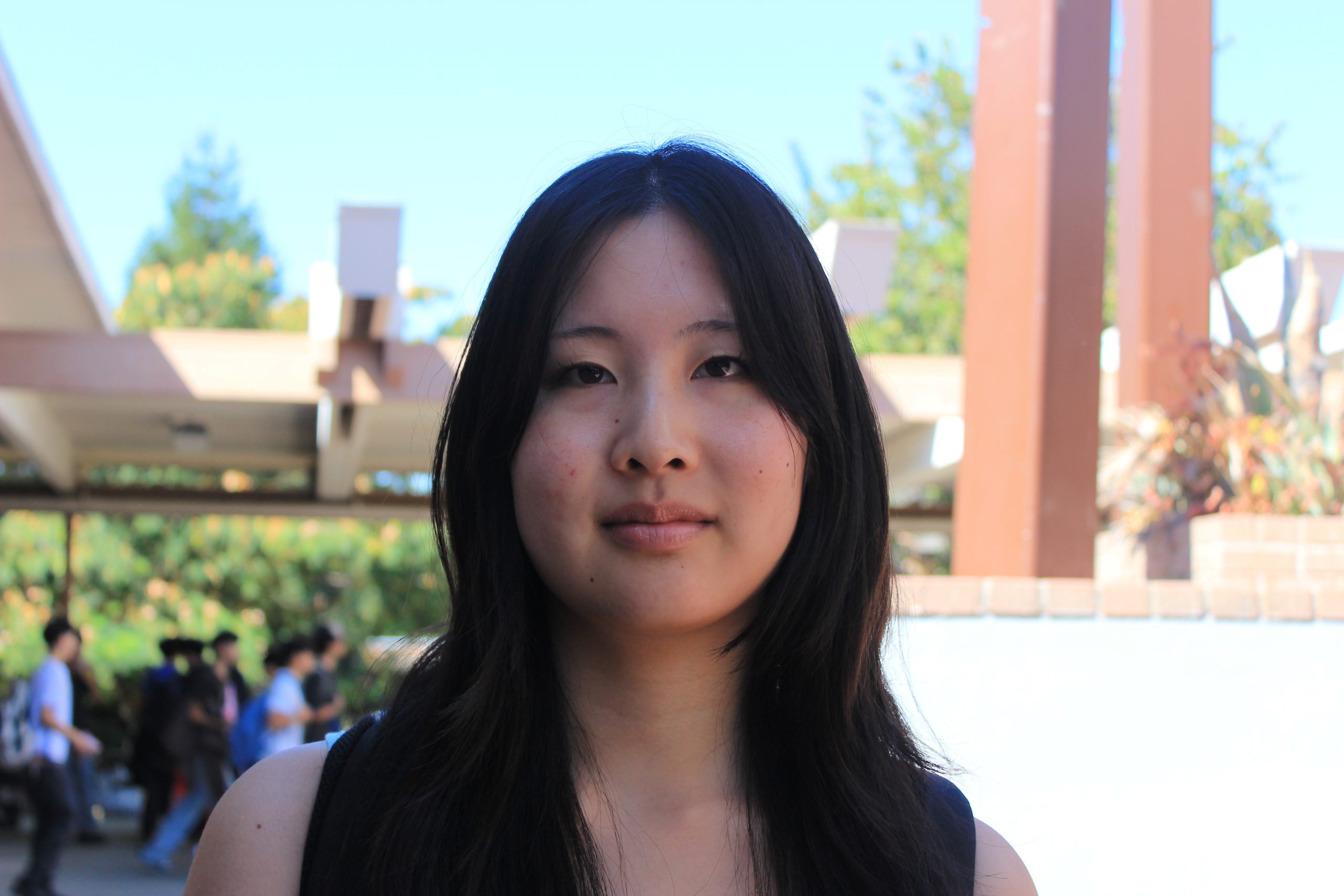
Elaine Lee, 12
“I would say that e-bike[s] [are] definitely less safe than other bikes because the e-bike[s] [are] way faster than other bikes. Also, it’s really hard to control sometimes because it’s super fast and it [sometimes] has the button [to press] to change speed. …So you are not control[ling] this by how you are biking. So it’s definitely like [a] machine. Yeah, I use [e-bikes] very [often], like for everyday [for] school, sometimes [to] McDonald’s, and sometimes to places a little further. But the speed limit. I actually don’t know how much I speed. Maybe I can speed, but I just don’t care. I think [the speed limit is] fine. I also drive, and I also [ride] the e-bike. I think [there aren’t many] e-bikes [that] can pass that limit, so I think it’s fine. I’m not going that fast. I think the most responsible [person] for getting injured is the person himself. Because they make the decision, they take responsibility. The other [person responsible] is maybe the driver because when you take the driver’s license test, you should [know] defensive driving. So when you drive, you need to focus on the environment instead of your phone, and focus on the traffic light and all other things and other people, like passenger[s] and people biking. So [that’s] maybe the second responsibility, and third, I think, is the people who make law[s]. There’s [been] no law for an e-bike; this thing was just coming up very recently, in these few years. So I think they don’t have time; they don’t see the problem at first, and they maybe don’t have that much time to make the law. I think students, students who drive e-bike[s], and maybe some people in San Francisco, they use e-bike[s] most of the time. That’s why I think the law is okay, because the law gives you a baseline for how [fast] we can go, so when you [are] sometimes driving really fast, you don’t think you have to deal with any consequences. But [with] the speed limit, you can predict: okay, I go this fast, I [may get a] ticket,. So you will think twice when you press the button to speed [to] 30 mph. So you will be more concerned about yourself. So I think it will help to just balance the speed and [restrictions]. I think for [the] age limit, maybe older than [12-years-old]. I think [that age is] good for using e-bike[s]. If you make the law, people have to follow the law. They have to follow the law if you make the law. Make the law, the age range, a little bit…wide, yeah, and the speed limit not that low, like 10, maybe 15 is fine. In general, I would say, if you don’t make the mistake, and you don’t face the consequences, you will never understand the risk. You [just] must [be] stopped by the police or get [an] injury. You will just learn from it. You know, there’s a saying in Chinese: …People can never tell people to do something. Just the things [are] gonna tell people what you do. Like the consequences of the result will tell you the risk. You will learn from it instead of [from] other people. Like when you’re taking a test, when the teacher tells you, “Stop looking your phone; please listen to what I’m saying,” and you will just say, “I don’t care.” After the test grade [comes] out, you just say, “Oh my god, I [regret it so much]. I’m gonna do my best on the next unit and [get a] 100 to bring my grade to [an] A.” So I would say, just when you learn from the result and the consequence, you will learn the risk. But the consequences better [not be] body harm. Not injures. Like, [being] stopped by [the] police is a good consequence. Instead of [an] injury.” — Elaine Lee, 12
Sarah Ngai, 12
“I think they’re fine, honestly. I have an e-bike, and I’ve ridden it around like once or twice, and I don’t know. It’s pretty much about the same as regular bike usage, where I’m just worried about not getting run over. I do not. I normally just get driven or walk. I think that the responsibility for how we get bikes kind of lies more with the bike riders, like bike riders and car drivers. So if you’re trying to increase road safety, some stuff
that policymakers might want to look at is in the normal driving test; you could maybe implement a section just focused on car-bike interactions, and then ensure that e-bike riders are being responsible. Policymakers might want to look into licensing e-bikes so that the riders themselves have to go through maybe a regular training. I kind of look at e-bike regulation the same way that I look at motor vehicle regulation. I don’t really consider it an infringement on personal rights to require, I guess, training for how to use it. So I don’t think policymakers should necessarily control the distribution of e-bikes because that’s kind of a free market thing. But I do think that regulating the usage of e-bikes through maybe annual or biannual licensing is a reasonable in-between. I could see an age minimum requirement of maybe above [12-years-old] or something, because I just don’t consider e-bikes dangerous. I’m not really sure when regulations would become too restrictive. But regarding the cycling community stuff, like when you’re deciding how to treat the overall community, you kind of have to balance your public safety with the cycling community’s sentiments. So I again think that is like making sure that everyone who’s riding an e-bike has gone through training, but not like restricting access to e-bikes or like discriminating against who [can] receive that training maintains the openness that the cycling community might want. I would say that, especially with the e-bike marketing, where it’s super user-friendly, I think that a lot of users don’t really understand the potential consequences of using e-bikes. And I think now that I think about it, one of my family friends actually recently got into an e-bike accident. It was totally unexpected for me to hear something like that. So I don’t know when people are purchasing the e-bikes. Maybe the [theoretical] e-bike training or when people are purchasing [them], I think there should definitely be more disclaimers about the potential dangers of e-bikes because it’s not really disclosed. However, I do think that they are a very useful mode of transportation since other modes of transportation, like cars, for example, they’re not really accessible to young people, and they’re also very expensive. And then public transportation is very unsafe and it’s also not very useful if you’re trying to get around a suburban city like Fremont. So I think that e-bikes do provide a very useful transportation opportunity because they’re just available. They’re widely available, and they’re cheaper, and that really enables a lot of youth activities, especially stuff after school, like extracurriculars. So I do think young people should have access to them. I just think that they should probably receive some sort of training before using them.” — Sarah Ngai, 12
Julia Yang, 9
“Honestly, I think there isn’t really much of a huge difference, especially if you’re giving them to responsible kids. Obviously, if you would, buy your child a normal bike. I think you would … at least buy them an e-bike that you believe to be safe. But I feel like there’s this misconception that people will get into more accidents, or maybe [that] it’s more dangerous to be on e-bikes. But in my experience, I think people are pretty responsible, and it doesn’t really make a huge difference. Personally, I don’t use an e-bike because they’re kind of expensive. But I used to get to school on an e-scooter, and then they made it illegal for people under 16. But I definitely know a lot of people who e-bike to school because their houses are on hills or it’s really hard to reach on foot. And I think a lot of people will be affected, but as long as it’s not ultimately banned or completely taken away, [extra] safety won’t really hurt. But I think it’s important to consider that a lot of people at school use bikes to get to school, to travel around, and to get home safely. I think most of the responsibility falls on the people who are operating them, like the drivers and the people who are riding the e-bikes. I don’t feel that there are a lot of safety concerns with them. I’ve had experiences with this firsthand. I was going home from school, and then my friend almost got run over by a car, but it was more our fault than, say, the manufacturer, or it was more the driver’s fault for not looking before they went across the crosswalk. But I think it’s [also] important to consider, perhaps in legislation, that drivers and riders are a big portion of the responsibility as well as the manufacturers. So I think it’s important to take a more holistic approach rather than just targeting manufacturers who are making the e-bikes. I think it’s really important to remember that people use these technologies a lot, and that it means a lot to them. And we need to figure out a way to make sure that it’s safe, but also doesn’t hinder how people go about their daily lives, especially at school, because a lot of people commute by e-bike or other e-transportation. [Also,] I know a lot of people who have been affected by the e-scooter age limit thing, and as a result, they had to ask their parents to buy them an e-bike, or take the bus, or have their parents send them and pick them up from school, and it’s really a huge inconvenience. And by the time you’re 16, you would already have a car or be aiming for your driver’s license, so there isn’t really much of a point to raising the age limit, anyways, since they wouldn’t be using the e-bikes or e-scooters, and I don’t think there’s really a huge difference between the safety mindset of a 14-year-old and a 16-year-old, maybe. And again, a lot of people use e-bikes to go to and go home from school, so I feel like it’s really not a great idea to put age limits on e-scooters or e-bikes, but instead you could say have education workshops or something like that that helps increase safety, but also doesn’t jeopardize people’s transportation to and from school. I think it becomes way too restrictive once people have to go out of their way to find different ways to go about their lives, and to balance that, I think, as I said before, it’s more important to have these education workshops or other initiatives that allow people to learn and implement safety principles in their lives while they’re using these e-bikes, but also letting them have the privilege of the e-bikes because sometimes it isn’t as easy as just telling people to find another way to go to or from school. Of course, there’s going to be risks [for anything]. Like, if you’re riding a normal bike, of course, you know the risk. Oh, you’re gonna fall off, and you might be able to survive, but you might also crack your head open and die. But that doesn’t stop us from riding a normal bike. And when you’re driving a car, obviously you could get into a car accident and die, but you could also go about your day normally and have a normal, happy, 100-year life, and if you’re going to be riding an e-bike, you probably do understand the risks and the cons of it, and you probably know at least how to ride the e-bike safely. And obviously, you’re not going to ride it if you think you’re going to die on your way home from school.” — Julia Yang, 9